Preface AI in Digital and Applied Humanities: Reconfiguring Knowledge, Learning, and Human Agency
Abstract
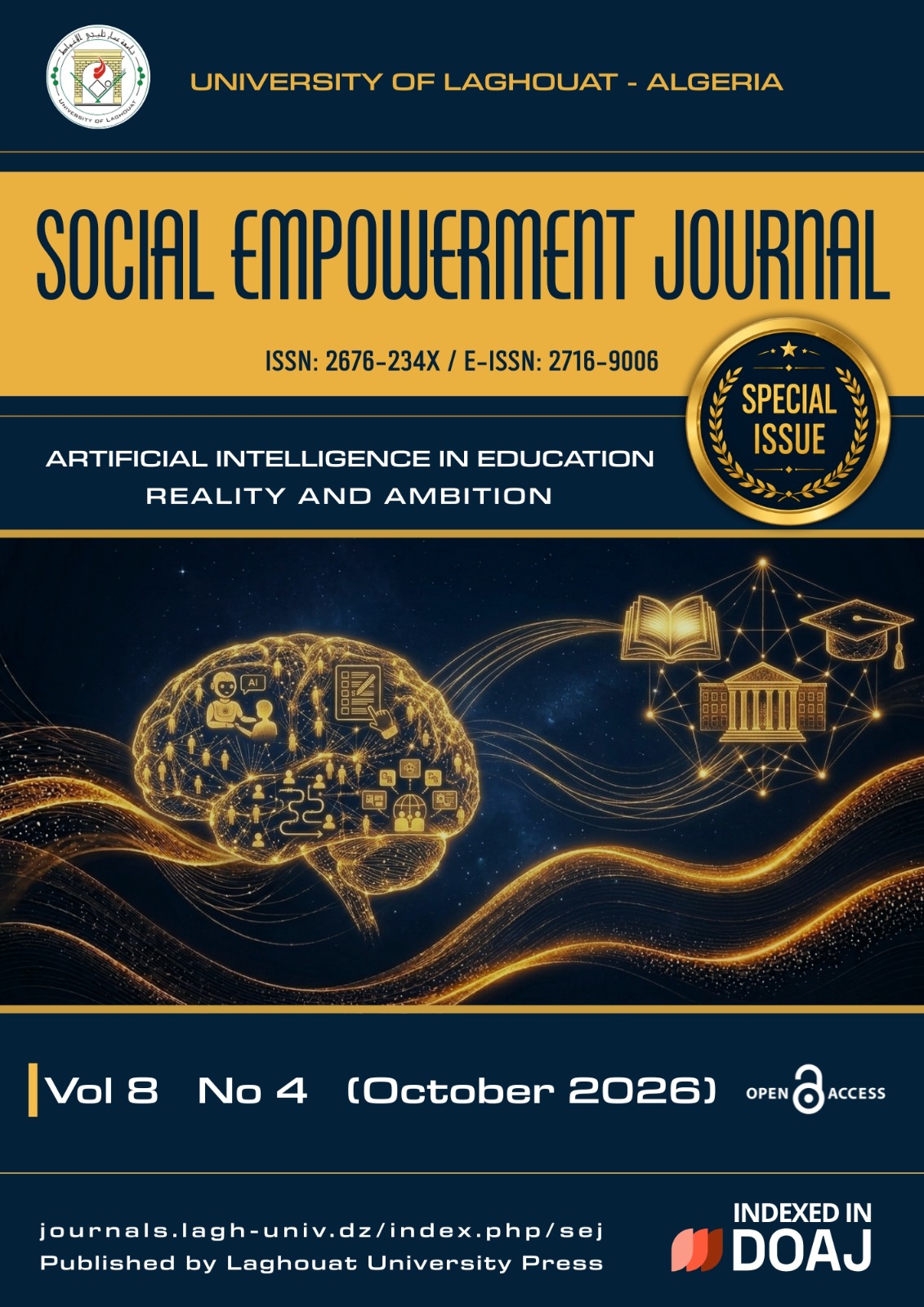
Artificial intelligence (AI) is changing how knowledge is produced, interpreted, shared, and applied. These changes raise questions about human agency, educational value, scientific integrity, and social equity. This special issue, AI in Digital and Applied Humanities, brings together six contributions that examine these changes in humanistic inquiry, higher education, metacognitive development, scholarly publishing, teacher competence, and human-AI collaboration. Drawing on conceptual analysis, mixed-methods research, exploratory educational intervention, critical commentary, and large-scale cross-national data, the contributions investigate how AI-mediated practices reshape epistemic authority, student engagement, self-regulated learning, research credibility, teacher readiness, and pedagogical design. Collectively, they highlight the tensions between technological efficiency and intellectual autonomy, automated knowledge production and scholarly accountability, and expanding AI capabilities and unequal institutional capacities. The review focuses on the risks of diminished critical thinking, unreliable or low-value scientific output, insufficient professional preparation, and inequitable access to AI-supported educational opportunities. At the same time, the contributions identify possibilities for strengthening metacognitive awareness, supporting personalized learning, improving educational decision-making, and fostering responsible human–AI collaboration. By integrating philosophical reflection with empirical evidence and conceptual frameworks, this special issue advances a human-centred, context-sensitive, and ethically grounded perspective on AI adoption. It argues that meaningful technological integration depends not simply on computational performance but on human judgment, pedagogical purpose, professional competence, transparent governance, and institutional accountability. The issue establishes an interdisciplinary basis for future research and policy aimed at ensuring that AI contributes to credible knowledge, authentic learning, and more equitable educational and scholarly environments.
Downloads
References
Committee on Publication Ethics. (2023). Authorship and AI tools: COPE position. https://doi.org/10.24318/cCVRZBms
Flavell, J. H. (1979). Metacognition and cognitive monitoring: A new area of cognitive–developmental inquiry. American Psychologist, 34(10), 906–911. https://doi.org/10.1037/0003-066X.34.10.906
Miao, F., & Cukurova, M. (2024). AI competency framework for teachers. UNESCO. https://www.unesco.org/en/articles/ai-competency-framework-teachers
Miao, F., & Holmes, W. (2023). Guidance for generative AI in education and research. UNESCO. https://unesdoc.unesco.org/ark:/48223/pf0000386693
UNESCO. (2021). Recommendation on the ethics of artificial intelligence. UNESCO. https://unesdoc.unesco.org/ark:/48223/pf0000381137
Van Manen, M. (2014). Phenomenology of practice: Meaning-giving methods in phenomenological research and writing. Left Coast Press.
Wang, S., Wang, F., Zhu, Z., Wang, J., Tran, T., & Du, Z. (2024). Artificial intelligence in education: A systematic literature review. Expert Systems with Applications, 252, Article 124167. https://doi.org/10.1016/j.eswa.2024.124167
Zimmerman, B. J. (2002). Becoming a self-regulated learner: An overview. Theory Into Practice, 41(2), 64–70. https://doi.org/10.1207/s15430421tip4102_2

This work is licensed under a Creative Commons Attribution-NonCommercial 4.0 International License.